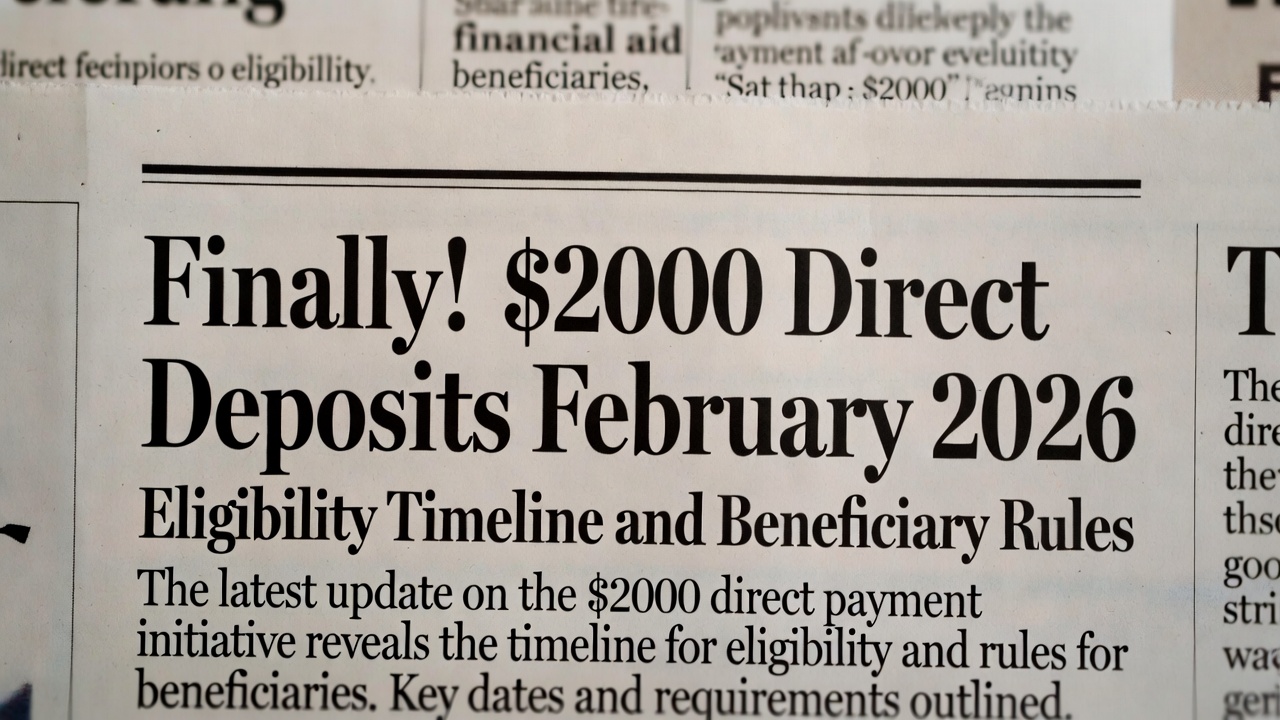
As February 2026 moves forward, many Americans are seeing posts online that talk about a “$2,000 IRS payment.” These claims are appearing on social media, short videos, and shared messages. Because everyday expenses like rent, groceries, and medical bills remain high, the idea of extra money has gained attention quickly. However, the reality behind these headlines is much more straightforward than it seems.
Connection to Tax Season, Not a New Program
The conversation is linked to the beginning of the 2026 tax filing season. The IRS started accepting 2025 federal tax returns in late January. Every year, February is the period when many early filers begin receiving their income tax refunds. For households that qualify for credits such as the Earned Income Tax Credit or child-related credits, refund totals can sometimes reach or even exceed $2,000. This normal refund process is being misunderstood by some people as a new federal relief payment.

No Nationwide $2,000 Stimulus Approved
There has been no official approval of a nationwide $2,000 stimulus payment for February 2026. In the United States, any large-scale federal payment must be authorized by Congress and signed into law by the President. At this time, no such law has been passed. Without that legal step, the government cannot send a universal payment to all taxpayers.
How Tax Refunds Actually Work

What many people are seeing in their bank accounts are regular tax refunds. A refund happens when someone pays more federal tax during the year than they actually owe. This usually occurs through paycheck withholding or estimated tax payments. After a tax return is filed, the IRS calculates the correct tax amount. If too much was paid, the extra amount is returned to the taxpayer.
Refund amounts vary from person to person. They depend on income, filing status, number of dependents, and tax credits claimed. Even families with similar earnings can receive different refunds because their financial details are not exactly the same. Since many refunds fall close to $2,000, this number is often highlighted online.
When Refunds Usually Arrive
February is traditionally a busy month for refund deposits. Taxpayers who file electronically and choose direct deposit typically receive their refunds within two to three weeks after the return is accepted. Paper returns generally take longer to process.
Disclaimer: This article is for informational purposes only and does not provide legal, financial, or tax advice. Refund amounts and timelines depend on individual tax returns and official IRS procedures. For accurate and updated information, consult IRS.gov or a qualified tax professional.